A responsible and innovative industrial player, EDF Power Solutions develops, builds, and operates renewable and low-carbon energy production facilities, as well as flexibility and electricity transmission solutions, across 25 countries.
As its portfolio continues to grow, so do expectations — not only to deliver low-carbon energy, but to understand and manage impacts on nature.
To address this, EDF power solutions partnered with Quantis to design and pilot a science-based methodology to assess and prioritize nature and biodiversity impacts across its assets and value chain.
Challenge
Renewable energy infrastructure is essential for decarbonization. But it relies on land, materials and complex supply chains that can affect ecosystems.
EDF power solutions had conducted environmental studies across more than 500 assets, including solar PV, onshore wind, offshore wind and storage systems. These assessments were developed at project level, using different indicators and formats. Data were not centralized, making cross-project comparison and strategic prioritization difficult.
At the same time, the external landscape was evolving:
- Nature-related frameworks such as SBTN require structured, science-based assessment and prioritization.
- CSRD introduces more detailed expectations for nature-related disclosures.
- Upstream activities — including mining and material processing — are increasingly recognized as significant drivers of biodiversity loss, yet remain difficult to quantify.
EDF power solutions wanted a consistent approach to identify material impacts across technologies and geographies, prioritize hotspots, and integrate nature into strategic decision-making.
Solutions
Quantis worked closely with EDF power solutions’ sustainability and technical teams to co-develop and pilot a tailored Nature Assessment framework.
The work combined methodological rigor with operational practicality.
A sector-adapted framework aligned with SBTN
The methodology aligns with SBTN Steps 1 and 2 (Assess and Prioritize) and covers key pressure areas relevant to renewable energy systems:
- Land and sea use
- Land-use change
- Water quantity and quality
- Pollution
- Ecosystem integrity
Full value chain Life Cycle Assessment (LCA)
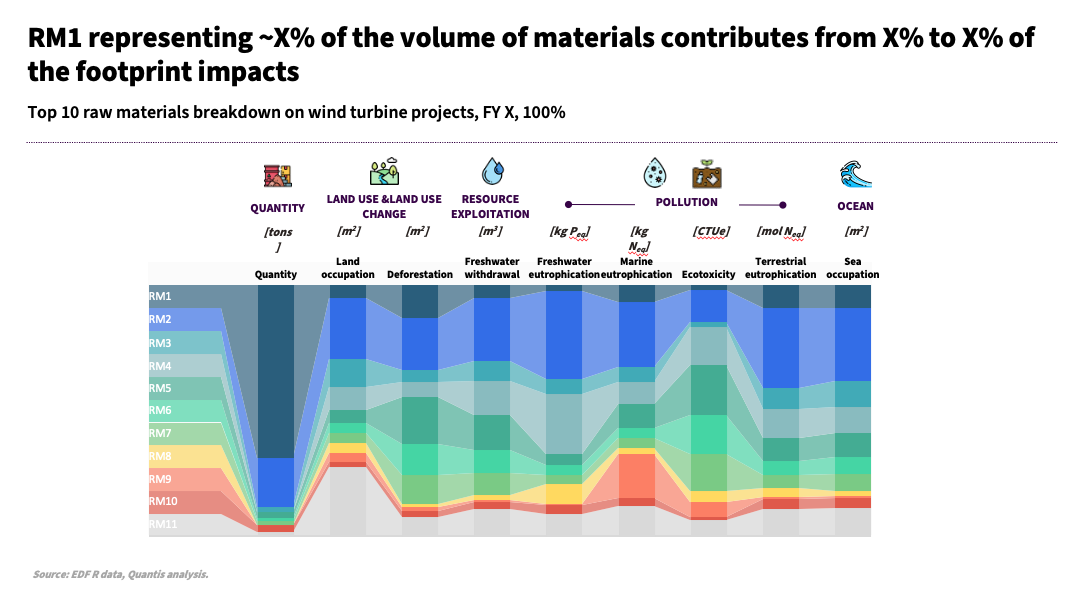
Archetype-based LCAs were conducted across upstream supply chains, direct operations and end-of-life phases. Solar PV, onshore wind, offshore wind and storage systems were assessed to enable cross-technology comparison and hotspot identification.
Geographically explicit prioritization
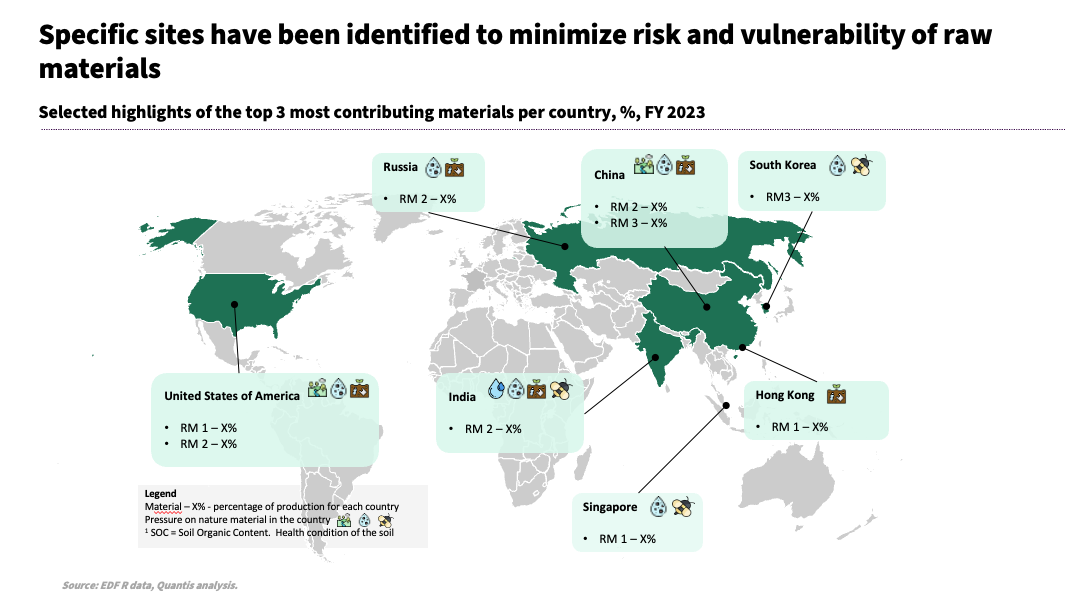
By integrating nature vulnerability data at multiple scales — from site-level analysis to country-level sourcing regions — the assessment highlights where impacts overlap with sensitive ecosystems, enabling targeted action.
Centralized data governance
A harmonized environmental database was designed and implemented to standardize indicators, units and geospatial formats. This transformed fragmented project data into a consistent, comparable and strategically usable resource.
Results
The pilot provided EDF power solutions with a clear and scalable foundation for managing nature impacts.
It confirmed that upstream supply chain activities are major contributors to biodiversity pressures across renewable technologies. It identified priority materials and sourcing regions where intervention can deliver the greatest benefit. And it established a reference methodology ready for broader deployment and future SBTN target-setting.
Key outcomes include:
- A science-based framework aligned with emerging nature standards
- Strengthened readiness for CSRD nature-related reporting
- Centralized and harmonized environmental data enabling cross-project comparison
- Clear priority areas to inform eco-design and procurement decisions
EDF power solutions is now better equipped to align renewable energy expansion with ecosystem protection — embedding nature considerations into the next phase of its growth.
As we accelerate the deployment of renewable energy, we have a responsibility to ensure our projects are aligned not only with climate goals, but also with the protection of ecosystems. Partnering with Quantis enabled us to bring scientific rigor to our nature impact assessments across 25 countries. Beyond their deep expertise and efficiency, the Quantis team was a pleasure to work with — bringing a collaborative and friendly spirit to a complex professional challenge. This work now provides us with the visibility and structure needed to prioritize action on our supply chain where it matters most.
Alessandro Frangi, Sustainability, Environmental and Social Director, EDF power solutions
Ready to align sustainability with business performance?