
Companies that want to remain competitive in 2030, 2040 and beyond must prioritize resilience.
Resilience starts with reliable data.
Quantis operates at the intersection of science — deep expertise in advanced environmental assessments, geospatial data — frameworks like the Task Force on Climate-Related Financial Disclosures (TCFD) and the Taskforce on Nature-related Financial Disclosures (TNFD) — and strong sector-specific knowledge to translate insights into actionable, business-focused strategies. Our holistic approach addresses both climate and nature risks and how they affect your company. Our methodology ensures that assessments are not only accurate, but also strategically relevant for your business.
Our Approach in Action
For two decades, our dynamic and visionary team has partnered with organizations to connect sustainability ambition to real business outcomes.
Ready to align sustainability with business performance?
-
Climate Risk + Adaptation
Damage to infrastructure and ecosystems from the climate crisis presents a rapidly mounting risk to business continuity. Companies’ operations and value chains are already being directly impacted by climate change, on top of increasing pressure to act from consumers, governments and investors.
Quantis helps our clients assess and identify the main risks keeping their business from resilience and growth – and define adaptation strategies to address them.
We bridge the gap between your decarbonization efforts and risk mitigation strategies, helping you develop climate transition plans that strengthen resilience and long-term performance. -
Nature Risk + Adaptation
Damage to our natural ecosystems presents rapidly mounting risk to business continuity. Companies are already feeling the effects of nature loss, along with pressure to act from consumers, governments and investors.
Quantis supports companies in moving from risk identification to action by developing adaptation plans that strengthen resilience across operations and value chains.
Understanding nature risk & adaptation
Nature-related risks are the potential threats to an organization stemming from its dependencies and impacts on nature. When ecosystem services — the various natural resources that support company’s operations — are disrupted, financial losses are not far behind. Quantis helps our clients quantify nature risk and build robust adaptation plans to meet regulations, industry standards, and business goals.

Integrating climate risk & adaptation
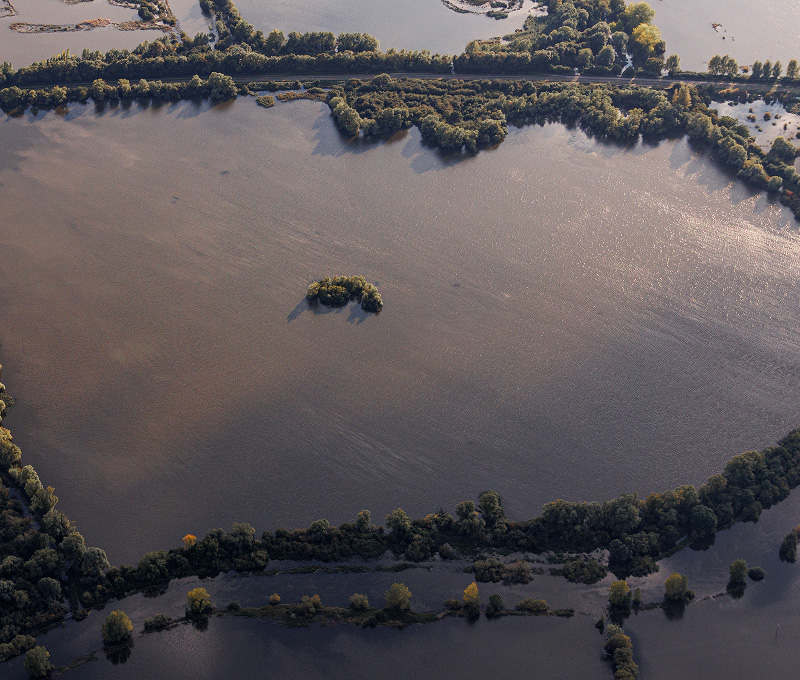
Climate risks present another set of issues for businesses’ owned infrastructure, value chains and people that are no less concerning —heatwaves, droughts, floods and more. While climate change is global, it’s important to recognize that its impacts are local, and so must be the adaptation actions. Environmental risks can affect entire value chains, and should be considered holistically to provide the full picture and avoid maladaptations.
Quantis provides clients with clarity on the source and intensity of climate and nature risks so adaptation plans strategies can be implemented, and challenges can be meaningfully addressed.
Ready to align sustainability with business performance?
Quantis experts

Simon Gillet
Global Nature Lead-
Géraldine Noé
Global Climate Strategy Lead 
Julie Christiaen
Senior Sustainability Consultant-
Giulia Maggiora
Sustainability Manager -
John Willard
Senior Sustainability Consultant -
Benedetta Falsetti, PhD
Sustainability Manager 
Sara Moubarak
Senior Sustainability Consultant






Latest case studies

Naturalia
Naturalia, the Casino Group’s organic brand, is taking its environmental commitment to the next level by launching, in partnership with Quantis, a groundbreaking…-
Angelini Industries
Discover how a century-old, family-owned company is embedding sustainability, safety and resilience at the heart of its purpose — partnering with BCG and Quantis to… -
ZDHC
ZDHC partnered with Quantis to assess and quantify the potential reduction in nature impact when companies adopt MRSL.



Latest insights
-
Nature finance: what AI can and cannot yet unlock for financial institutions
AI is drastically expanding the ability of financial institutions (FIs) to assess nature impacts and dependencies. But converting better analytics into stronger risk… -
The changing role of the CSO: From visionary to implementation driver
In brief: Chief Sustainability Officers are in the middle of an identity shift. The same leaders who secured executive buy-in, built roadmaps, and stood up… -
Nature risk: an overlooked driver of business value
In brief: Risk is the new reality for fashion For years, the assumption within the fashion industry was that more sustainable products would…