Context & need: navigating complexity to deliver impact
For this multinational food group, decarbonizing ingredients procurement meant confronting one of the most complex landscapes in the company with a highly fragmented portfolio (more than 5,000 materials, from 700 origins) and highly heterogeneous supplier maturity levels, with no single supplier accounting for more than a few percent of emissions.
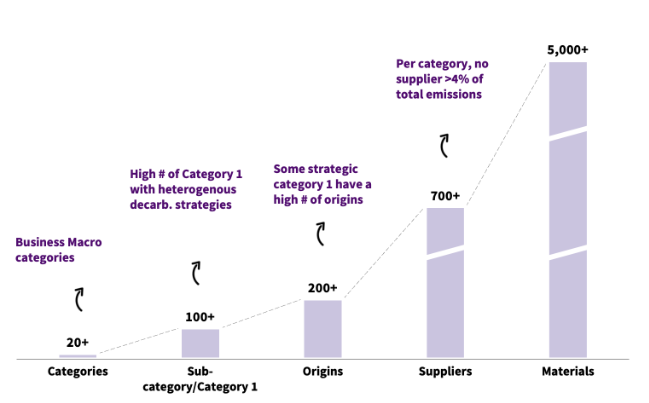
Procurement teams were facing scattered data, inconsistent methodologies, and limited visibility on where to focus. Without a unified system, efforts risked being diluted across hundreds of suppliers, with limited certainty on ability to deliver against its 2030 climate pathway and ROI.
The need was clear: a structured, actionable, supplier-level approach to Scope 3 decarbonization, embedded in procurement operations and capable of guiding teams toward confident, cost-effective decision-making.
Objectives & value: a clear decarbonization pathway and tangible business outcomes
Together, the company and Quantis set out to design a pragmatic and scalable supplier engagement approach: one that would turn decarbonization from a corporate ambition into a concrete, data-driven operating model for buyers.
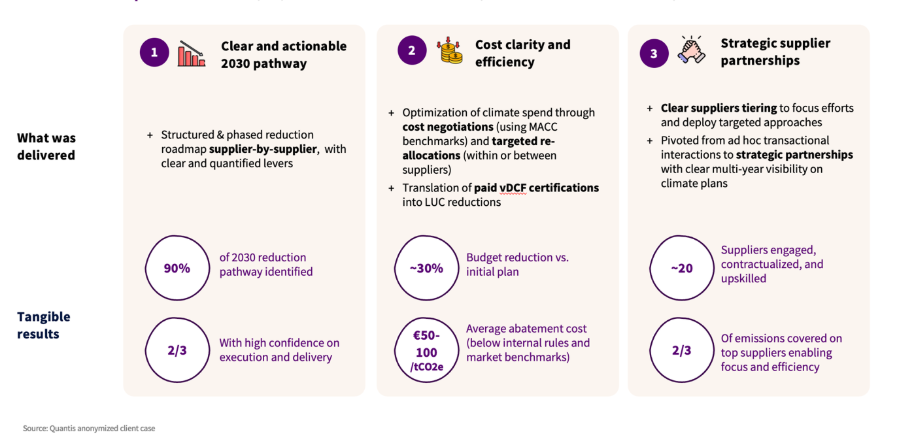
Over a 12-month program, the supplier engagement initiative translated the company’s Scope 3 ambition into a clear, executable and cost-efficient procurement model, grounded in supplier-level roadmaps and buyer-led execution. The program created value across three core areas:
- Pathway clarity: a structured, supplier-by-supplier 2030 decarbonization roadmap, prioritizing high-impact partners and quantified levers with high confidence of delivery
- Cost efficiency: improved cost–carbon transparency enabling budget optimization, lower average abatement costs, and a positive return on investment versus initial plans
- Strategic supplier engagement: a shift from transactional interactions to focused, multi-year partnerships, embedding climate performance into procurement routines and supplier negotiations
Collectively, these results established a foundational decarbonization architecture while also unlocking measurable business value.
The Quantis approach: turning complexity into a practical operating model
Quantis deployed a year-long program designed not only to build tools and methodologies, but to embed new ways of working across procurement.
1. Establishing the data and methodological backbone
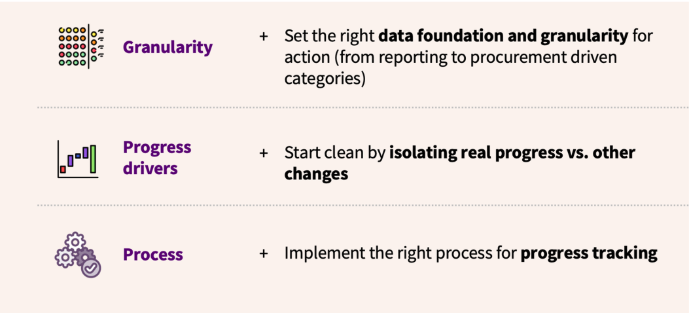
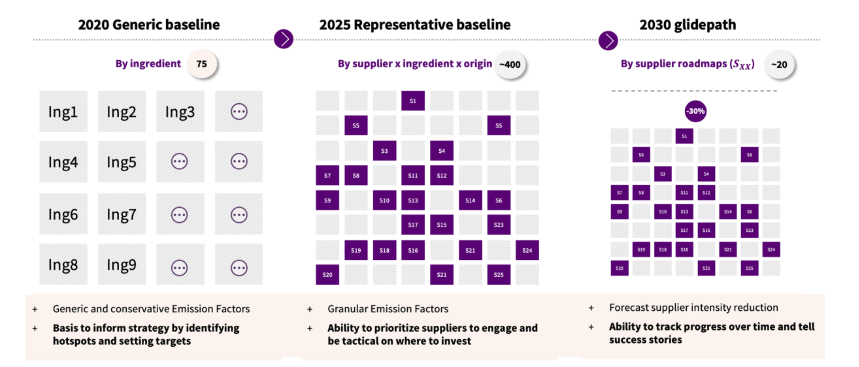
The partnership began with a restated, supplier-granular footprint, a harmonized set of carbon “golden rules,” and a consistent methodology for integrating supplier-specific emission factors, including Land Use Change data from traceability programs (vDCF).
2. Building a supplier-centric decarbonization roadmap
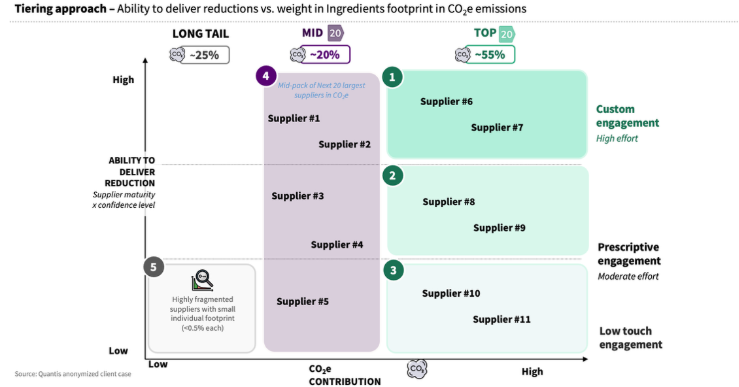
Quantis prioritized high-impact partners representing more than half of emissions and developed category playbooks with ingredient-specific climate strategies and modelled reduction pathways by supplier and by lever — processing, LUC, regenerative agriculture, reformulation — creating a structured, phased view of what was achievable, at what cost, and with what degree of confidence.
This bottom-up approach enabled the construction of supplier-level roadmaps and a unified dashboard linking reduction potential, confidence levels and cost implications.
3. Empowering buyers and driving real engagements
Beyond the analytics, Quantis worked directly with procurement teams to embed sustainability in their day-to-day activities:
- Dozens of supplier discussions supported,
- 40+ buyers trained on standards, data quality, cost-carbon logic and negotiation levers,
- Tools (playbooks, supplier factsheets, and scorecards) deployed across categories, allowing buyers to lead conversations in a push vs. pull position.
This hands-on support helped shape strong negotiations, influence contracting, and deliver measurable reductions.
4. Why this model matters for procurement & sustainable sourcing leaders
This program demonstrates how Scope 3 decarbonization can shift from a reporting challenge to a strategic procurement accelerator.
For CPOs and sustainable sourcing leaders, several insights are replicable across sectors:
- A supplier-level approach is essential: category averages and generic emission factors are insufficient to prioritize investments or negotiate effectively. Supplier-specific insights unlock both impact and cost efficiency.
- Decarbonization must be buyer-led: when equipped with the right data and tools, procurement teams can drive strategic dialogues that deliver both emissions reductions and commercial value.
- Value and impact are intertwined: cost-optimized decarbonization programs can generate returns far exceeding their investment when treated as part of procurement strategy rather than compliance.
- Scalability requires structure: harmonized methodologies, governance routines, and digital-ready data architectures to ensure that progress continues despite turnover, portfolio shifts, or increasing regulatory pressure.
This program offers a blueprint for any procurement team seeking to turn Scope 3 complexity into focused action and measurable value.
We’re your full-service partner for the transformational journey. Our strategic advisors are equipped to guide you at every point along the way.