In brief:
- Supply chain disruption is becoming more frequent and interconnected, making resilience a strategic business capability rather than an operational concern
- Resilience starts with understanding where the business is most exposed, using better visibility, risk mapping and data to identify the suppliers, materials and locations that matter most
- Data alone is not enough: environmental risks need to be translated into decision-useful insights and embedded into the governance and workflows where procurement and investment decisions are made
- Technology and AI can strengthen real-time monitoring and response, but long-term resilience also depends on strong supplier relationships, shared investment and human judgment
- Companies that combine visibility, decision-useful insight and coordinated action can turn supply chain risk into greater adaptability, stronger performance and competitive advantage
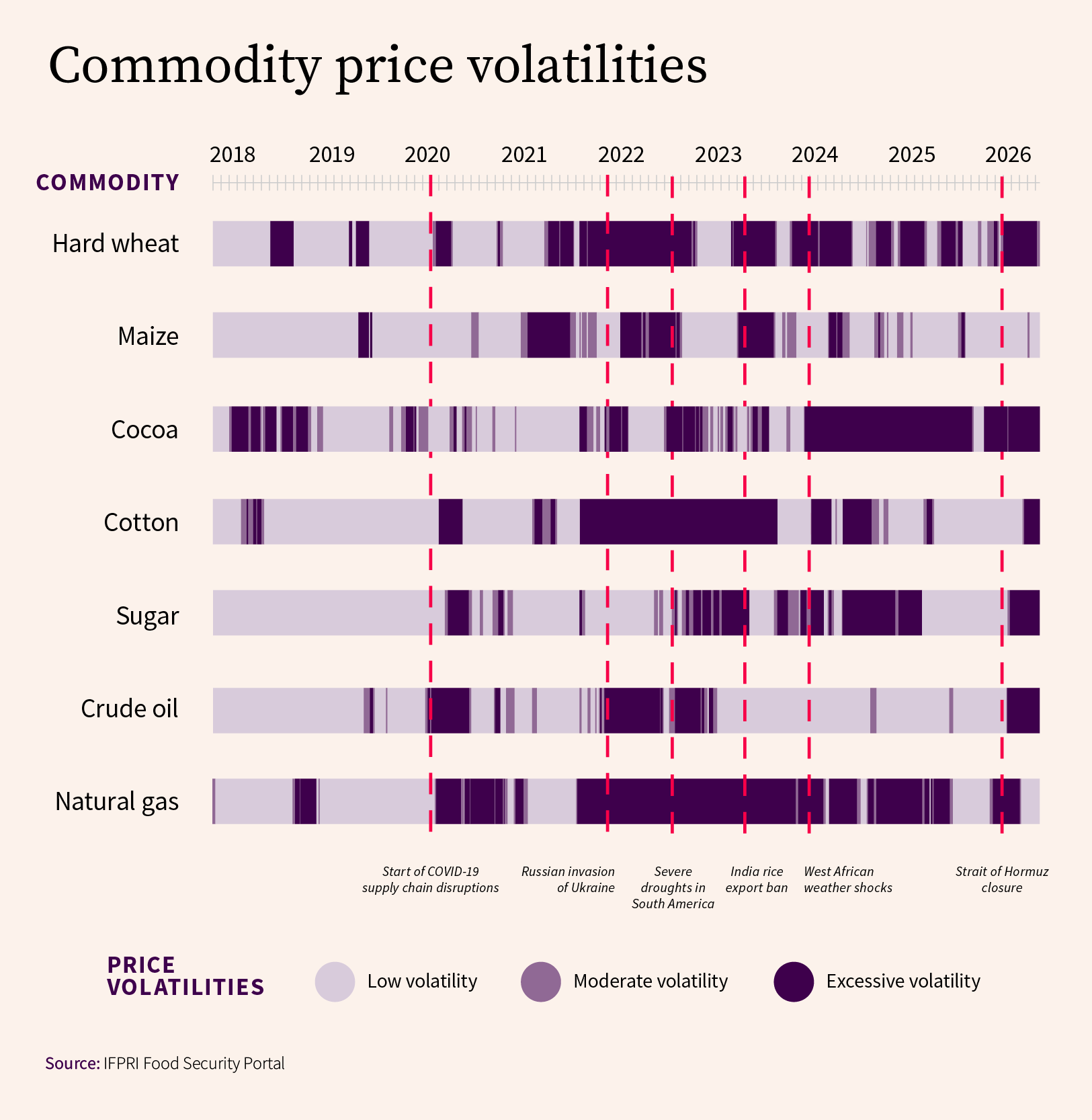
Geopolitical tensions, trade disruptions, and extreme weather events are converging. From COVID-19 to the Strait of Hormuz, recent years have demonstrated just how quickly global supply chains can fracture. In BCG’s Annual State of Supply Chain Planning Survey 2025, which gathered perspectives from more than 180 supply chain and planning leaders across industries and regions, over 90% of respondents view supply chain planning as a strategic capability, not just an operational function.
The market has also moved. Regulators now expect companies to demonstrate not just what risks exist in their supply chains, but how those risks are governed, escalated, and acted upon. CSRD and CSDDD have transformed supply chain transparency from a strategic choice to a legal baseline. With AI and digital tools making capabilities available at speed and scale that weren’t practical five years ago, the question is no longer whether to act. It’s how to act effectively.
Across sectors — from food and beverage to fashion, pharma to industrials — we see companies making meaningful progress. Companies building structural resilience through better visibility, smarter data, and deeper supplier collaboration are turning instability into competitive advantage.
Here’s what they’re doing differently.
Lesson 1: Resilience starts with understanding your exposure
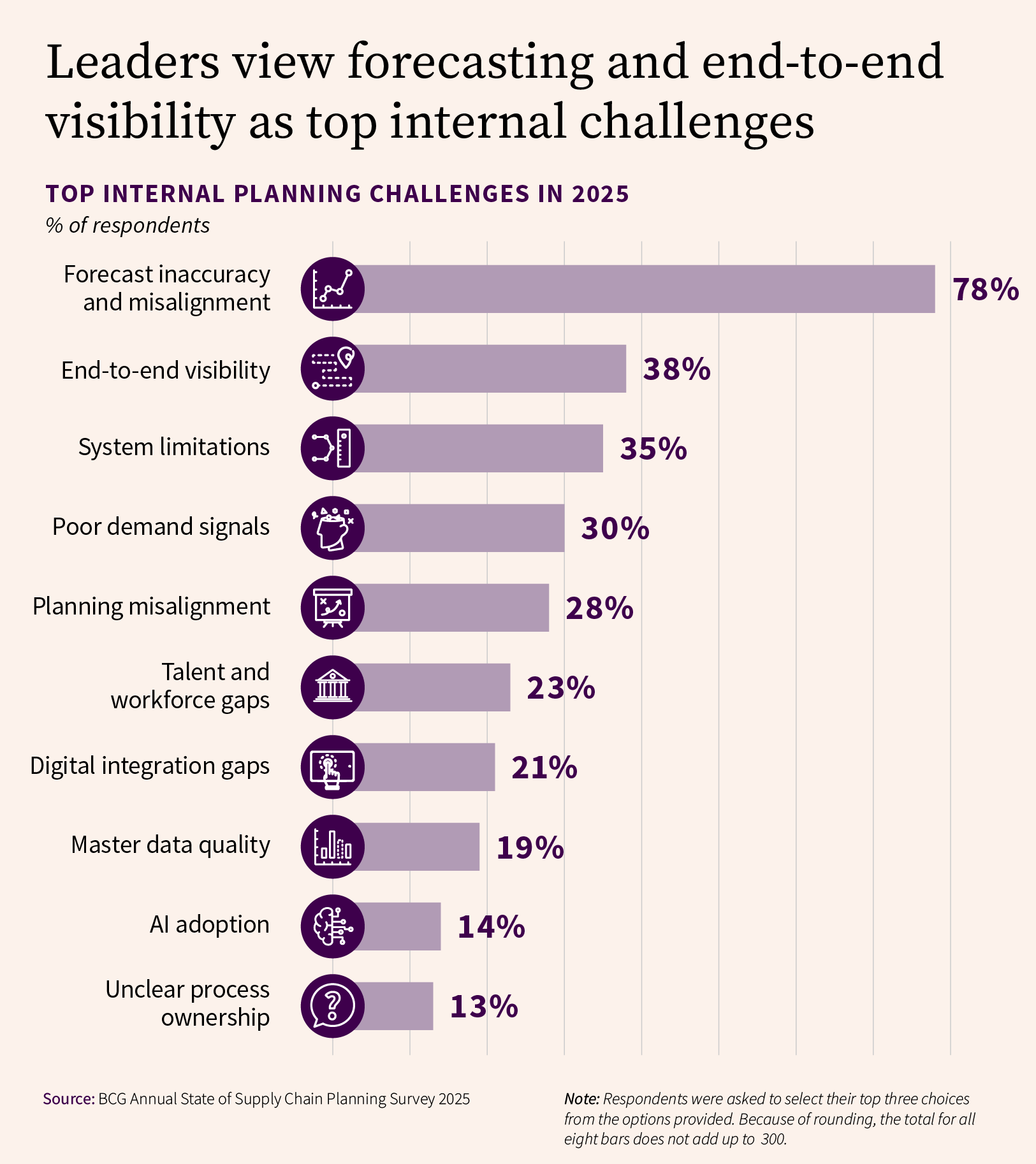
You can’t manage what you can’t see. Yet 38% of supply chain leaders cite limited end-to-end visibility as a top internal challenge. Despite industry differences, the structural vulnerabilities are largely the same: concentration in single geographies or materials, limited visibility beyond tier-one suppliers, and fragmented supplier data that can’t support confident decisions.
Leaders aren’t waiting for disruption to force clarity. They’re mapping their exposure continuously, embedding risk assessment into everyday procurement decisions rather than treating it as a periodic project. But mapping everything isn’t the goal. Twenty exposed retail locations might sound worse than one exposed warehouse, until you consider that the warehouse alone might supply a hundred storefronts. Leaders weight exposure by how structurally critical each node is, not just how many nodes are affected. Rather than achieving better predictions, it’s about understanding where the business is most exposed, and building the operational flexibility to respond when disruption strikes.
Digital and AI make this possible at scale. Real-time supplier monitoring, climate modeling, geopolitical risk assessment, and dynamic risk mapping across tiers and materials are now within reach for most organizations. A leading luxury fashion group, for instance, built dynamic risk models for strategic raw material supply chains, covering natural fibers like cotton and silk, using AI and climate modeling to anticipate how shifts in climate and nature will impact yields and quality before disruptions hit.
Lesson 2: Data alone isn’t enough — decision-useful insight that reaches the right people is the differentiator
Most companies have completed environmental risk assessments. The problem is that those assessments sit in a silo, disconnected from the enterprise systems where decisions actually get made. The result: risks were identified (once), but never consistently scored, escalated, or acted upon.
What separates leaders is a bridge between assessment outputs and real business decisions. They build what we call a “translation layer,” converting findings across climate, nature, water, and other domains into calibrated risk statements scored against the common criteria used already by risk management teams: severity, likelihood, preparedness, and time horizon. AI is increasingly what makes this translation possible at scale and speed: what once took weeks of market-by-market analysis can now happen in days, without sacrificing rigor or traceability back to source data. These outputs are then mapped directly into existing governance structures and risk registers.
Naturalia, Casino Group’s organic retail brand, worked with Quantis to put this into practice. The team mapped climate and nature risk across Naturalia’s full food procurement portfolio, then narrowed to a priority list of exposed supply chains. Two of them, tomato and almond, were analyzed in depth under multiple IPCC climate scenarios through 2050. For almonds, the analysis showed growing regions in Spain and Italy already vulnerable to water stress, drought, and pollinator decline, with conditions worsening by 2050 into real volume loss, quality decline, and rising purchase costs. The findings fed into a three-year resilience roadmap covering procurement policy, product diversification, and supplier engagement.
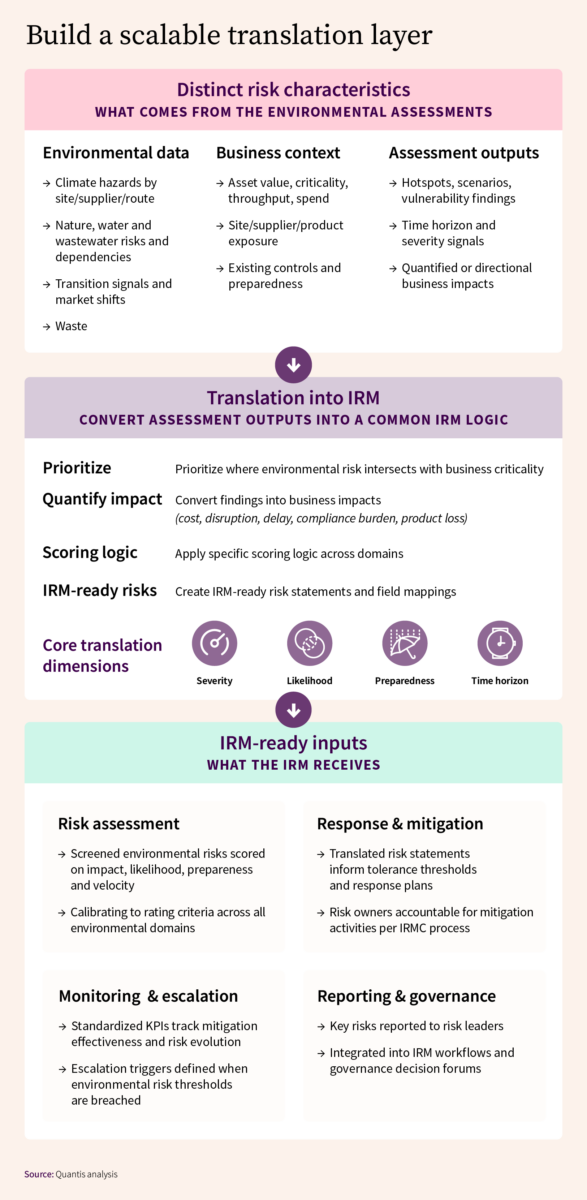
The leaders we see building this capability take it a step further. Environmental risk needs to reach procurement teams, capex committees, and the board through governance structures they already use, rather than sitting in reports that never leave the sustainability function. Critically, this only holds if the process is built to last. One-off assessments don’t build this capability. Leaders replace project-based work with a repeatable, governed annual process, improving rigor, data traceability, and organizational ownership year over year.
Lesson 3: Differentiation comes from coordinated response, through technology and supplier strategy
Across industries, leading companies are innovating to reduce dependence on critical raw materials, concentrated geographies, and single-source suppliers. That kind of preparation can help companies continue operating through disruption, rather than being forced to pause or scramble for alternatives. Companies can build that capacity through the coordinated efforts of two levers: technology and supplier strategy.
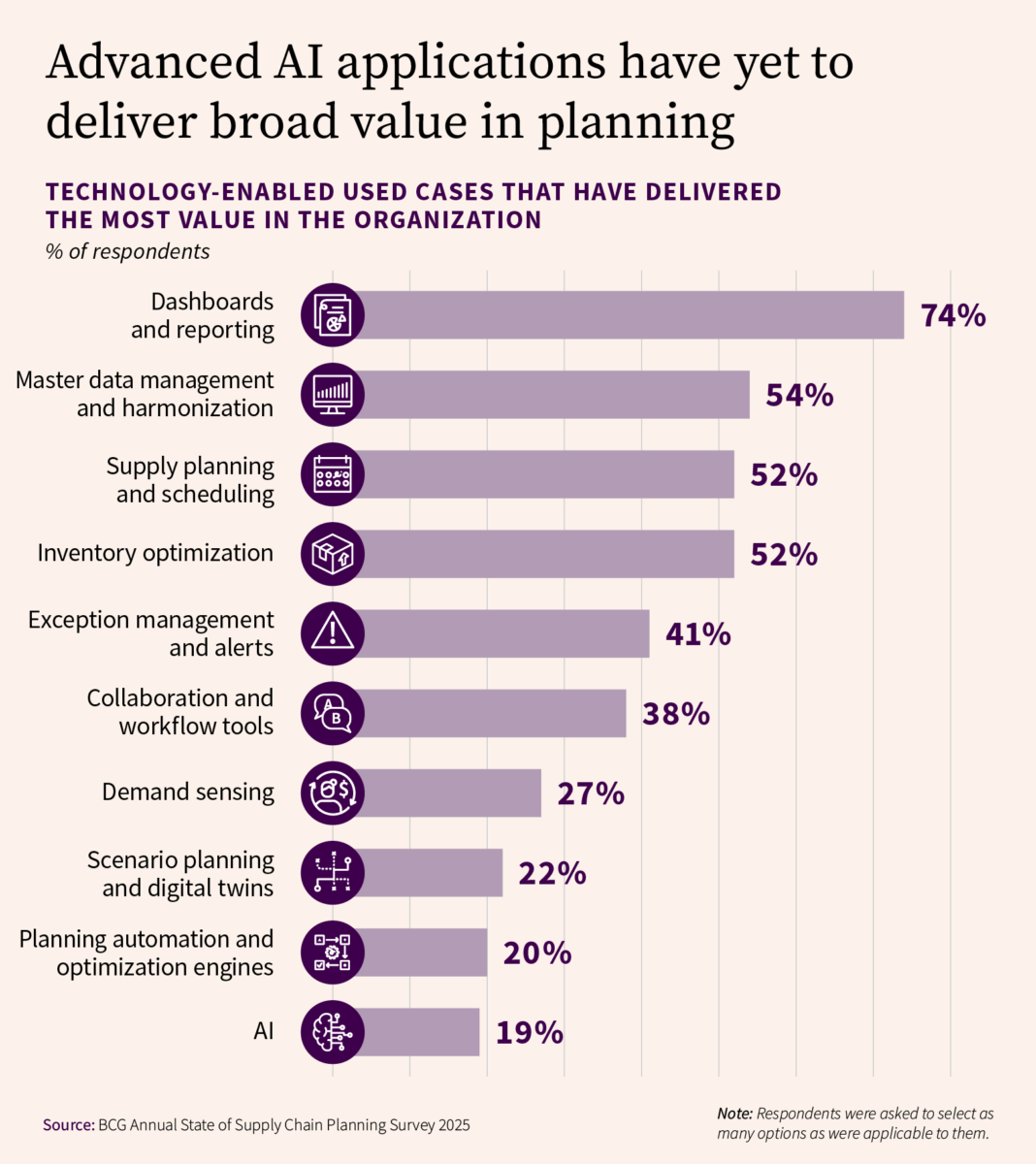
- On technology: A centralized digital control tower, integrating real-time environmental, supply chain, and market data, turns response from reactive to deliberate. Instead of reacting after a region goes offline or a contract deadline arrives, leaders can answer the questions that matter in the moment: Is my supply sufficient? Which regions carry the lowest risk right now? Should I lock in contracts today, or wait? Many organizations are still early in building the kind of real-time capability that provides the insight to guide decision making.
- On supplier strategy: Technology is only part of the equation. Procurement leaders across sectors are consistent on this point: AI is useful, but human knowledge and supplier relationships are what actually move performance. The leaders are co-developing long-term roadmaps with key suppliers, sharing risk and investment, and building the technical capacity suppliers need to withstand disruption.
Mars, one of the world’s leading food manufacturers, faced growing exposure to water scarcity, extreme weather, and soil degradation across its rice-sourcing regions in the US, Thailand, India, and Pakistan. Rather than treat this as a supplier problem to manage from a distance, the company invested directly in its farmers’ ability to adapt: water-saving irrigation techniques, digital monitoring tools, and hands-on training reaching thousands of smallholder growers. In Thailand alone, the program lifted rice yields by up to 43% while cutting water use by more than half. Farmers across South Asia saw water consumption drop by up to a third and incomes rise by as much as $56 per hectare per season. As a result, Mars now has a more resilient supply base, built on suppliers better equipped to withstand disruption.
Together, technology and supplier strategy build two different kinds of capacity: one for responding to disruption as it happens, the other for reducing exposure to it over the long term.
Building resilience that compounds
What’s changed is not supply chain complexity. It’s the pace and convergence of disruption, and the expectations of regulators, investors, and boards that companies manage it with rigor and accountability.
The three lessons above are not sequential steps. They reinforce each other. Better visibility generates better data. Translated into decision-useful insight and routed to the right people, that data drives better decisions. Stronger supplier relationships and smarter technology make the whole system more adaptive over time.
In the decade ahead, competitive advantage will belong to organizations that treat supply chain planning not as a function, but as a strategic engine, one that pairs sharper technology with the human judgment and relationships to act on it, translating risk into value and disruption into differentiation.